
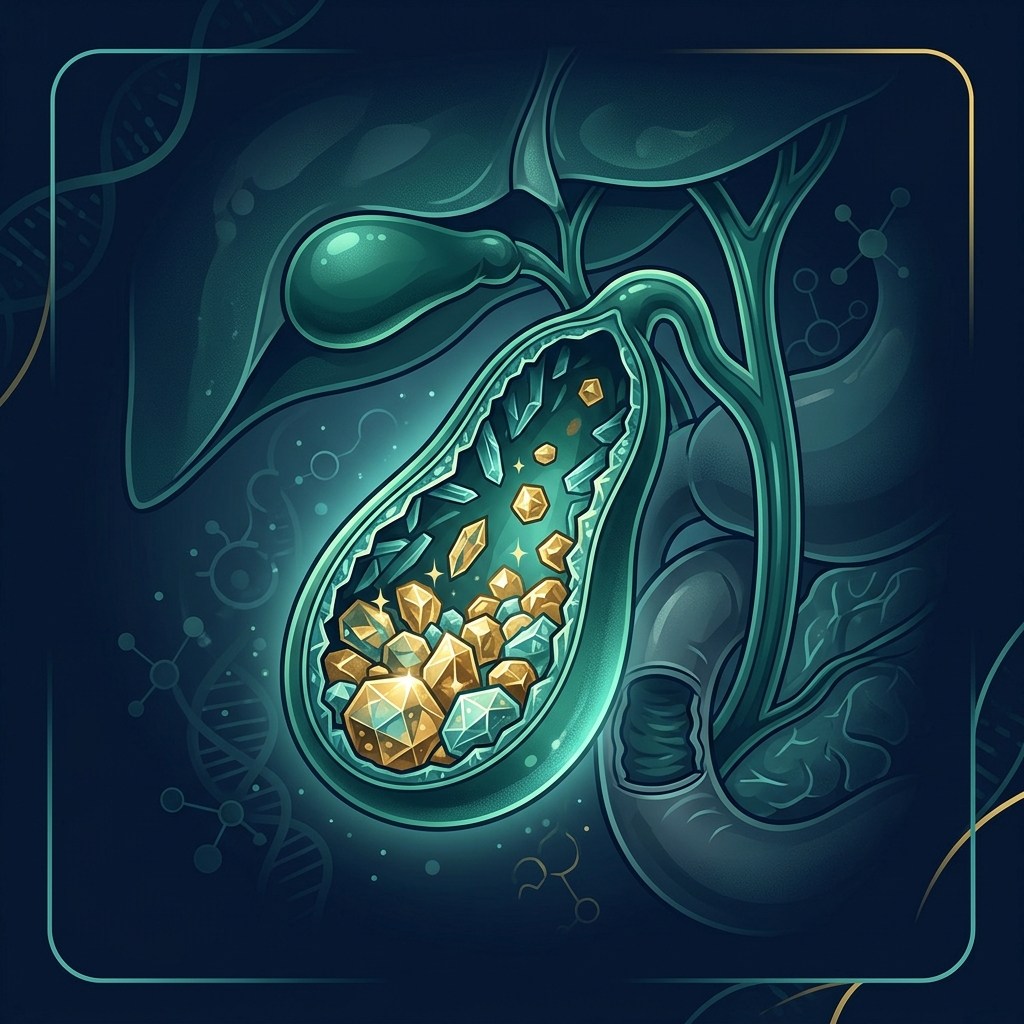
Gallbladder-related events — gallstones (cholelithiasis) and gallbladder inflammation (cholecystitis) — are a documented side effect of GLP-1 medications. This is not unique to semaglutide or tirzepatide — it is a consequence of rapid weight loss by any method, including bariatric surgery, very-low-calorie diets, and medication-assisted programs. This guide explains the mechanism, the actual risk level, and evidence-based strategies to reduce it.
Why Rapid Weight Loss Causes Gallstones
When you lose weight rapidly, the liver secretes more cholesterol into bile. Simultaneously, the gallbladder contracts less frequently because you are eating less. This combination — cholesterol-saturated bile sitting in an underused gallbladder — creates the conditions for cholesterol crystal formation and gallstones.
This is not a medication-specific effect. Any intervention that produces >1.5 kg/week (3.3 lbs/week) weight loss increases gallstone risk. Since GLP-1 medications at higher doses can produce this rate of loss, the risk is present. In the STEP trials, gallbladder-related adverse events occurred in approximately 1.6% of semaglutide patients vs. 0.7% on placebo.
Risk Factors
| Higher Risk | Lower Risk |
|---|---|
| Female sex (2x risk vs male) | Male sex |
| Age > 40 | Age < 40 |
| Prior gallstone history | No gallstone history |
| Very rapid weight loss (>3 lbs/week) | Gradual weight loss |
| Very low fat diet | Moderate healthy fat intake |
Evidence-Based Prevention Strategies
- Maintain moderate fat intake: 20–35% of daily calories from healthy fats. Fat stimulates gallbladder contraction, preventing bile stasis. See our nutrition guide
- Avoid crash dieting on top of GLP-1: The medication reduces appetite naturally — do not add extreme caloric restriction
- Adequate fiber: 25–30g daily. Fiber binds bile acids and reduces cholesterol saturation
- Stay hydrated: Dehydration concentrates bile. Minimum 64 oz water daily
- Coffee consumption: Interestingly, moderate coffee intake (2–3 cups daily) is associated with reduced gallstone risk
Managed Risk. Monitored Progress.
Your TelehealthFX clinician monitors for gallbladder symptoms and adjusts your plan to minimize risk.
Start SafelyWhen to Seek Immediate Medical Attention
Contact your clinician or go to urgent care if you experience:
- Severe, sudden pain in the upper right abdomen or center abdomen (below the sternum)
- Pain that radiates to the right shoulder or back
- Nausea/vomiting accompanied by severe abdominal pain (distinct from typical GLP-1 nausea)
- Fever with abdominal pain
- Yellowing of skin or eyes (jaundice)
Frequently Asked Questions
Can I take semaglutide if I have had gallbladder removal?
Yes. If your gallbladder has already been removed (cholecystectomy), gallstone risk is eliminated. GLP-1 therapy is safe for post-cholecystectomy patients.
Should I get an ultrasound before starting GLP-1?
Routine gallbladder screening is not recommended before starting GLP-1 therapy unless you have a history of gallbladder disease or symptoms. If you have known gallstones, discuss risk-benefit with your clinician.
Informed Patients Get Better Outcomes
Understanding the risks — and how to mitigate them — is part of responsible GLP-1 therapy.
Get StartedReferences
- Stokes, C. S., et al. (2014). Gallstone formation and weight loss. Alimentary Pharmacology & Therapeutics, 40(6), 582–609. doi:10.1111/apt.12898
- Novo Nordisk. (2021). STEP 1 adverse events, gallbladder subanalysis. FDA prescribing supplement.