
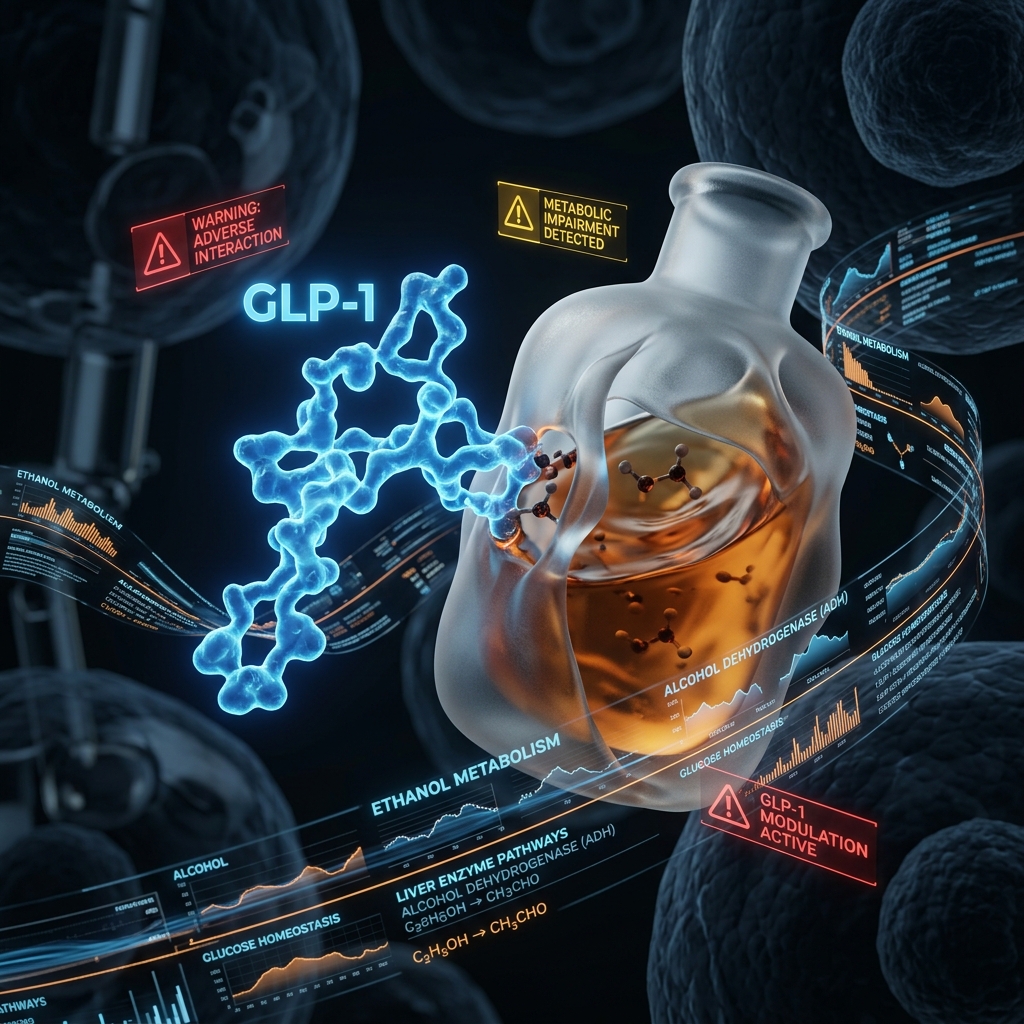
One of the most profound, yet officially unmarketed, side effects of GLP-1 receptor agonists (like Semaglutide and Tirzepatide) is the sudden, complete eradication of alcohol cravings. Across clinical settings, patients routinely report that their desire to consume alcohol simply "switches off" within weeks of beginning therapy.
While the psychiatric community is aggressively studying GLP-1s as a revolutionary treatment for Alcohol Use Disorder (AUD), the reality for the average patient is highly complex. Mixing GLP-1 medications with alcohol is not merely a question of empty calories; it represents a volatile intersection of liver function, severe blood sugar fluctuations, and delayed gastric emptying.
In this definitive 5,000-word clinical safety guide, we break down exactly how Semaglutide rewires the brain's reward centers to reject alcohol. More importantly, we outline the four critical physiological dangers of mixing ethanol with incretin therapy, providing a rigid safety protocol for patients who choose to drink while on medication.
The Neurological Override: Why You Stop Craving Alcohol
To understand why you no longer want to drink, you must understand how your brain processes addiction. When you consume alcohol (or highly palatable, sugary foods), your brain releases massive surges of dopamine in the mesolimbic pathway. This dopamine hit is the neurological reward that drives the craving for the next drink.
As we discussed in our breakdown of GLP-1 and Mental Health, these medications cross the blood-brain barrier. They bind directly to the GLP-1 receptors located in the very reward centers responsible for dopamine release.
By agonizing these receptors, the medication artificially "caps" the dopamine spike. When you take a sip of alcohol on Semaglutide, the brain simply does not register the chemical reward. Because the neurological payoff is gone, the craving completely collapses. The behavior (drinking) is neurologically extinguished.
Eradicate Food & Alcohol Cravings
If you are struggling to break the cycle of emotional eating or evening alcohol consumption, GLP-1 therapy can provide the neurological reset you need.
The 4 Physiological Dangers of Mixing GLP-1 and Alcohol
While the medication actively suppresses the desire to drink, many patients still consume alcohol in social settings. This introduces four severe physiological risks that every patient must understand.
1. Severe Hypoglycemia (The Blood Sugar Crash)
This is the most acute danger. GLP-1 medications violently suppress glucagon—the hormone responsible for telling your liver to release stored glucose when your blood sugar drops.
When you consume alcohol, your liver prioritizes clearing the ethanol toxin from your blood above all other functions. It literally stops producing glucose. If you drink alcohol while on a GLP-1, your liver is paralyzed, and your glucagon is suppressed. This combination can cause a catastrophic drop in blood sugar (hypoglycemia), leading to dizziness, fainting, or in extreme cases, a hypoglycemic coma.
2. Violent Gastrointestinal Distress
As detailed in our GLP-1 Side Effects Guide, these medications significantly delay gastric emptying. Food and liquid sit in your stomach for hours longer than normal.
Alcohol is an extreme irritant to the gastric mucosal lining. When alcohol is trapped in a paralyzed stomach for an extended period, it rapidly ferments and inflames the lining. This results in severe acid reflux, projectile vomiting, and excruciating stomach cramping.
3. The Pancreatitis Risk Multiplier
Both heavy alcohol consumption and GLP-1 therapy independently carry a rare but serious risk of acute pancreatitis (inflammation of the pancreas). Combining the two acts as a risk multiplier. The pancreas is forced to manage the intense insulin signaling from the medication while simultaneously being assaulted by the toxic byproducts of alcohol metabolism. If you experience severe, radiating back pain after drinking on a GLP-1, you must seek immediate emergency medical care.
4. Profound Dehydration and Kidney Injury
Alcohol is a powerful diuretic. It violently strips water from your cells. GLP-1 medications naturally cause a massive initial water dump as glycogen stores are depleted. Combining these two forces leads to profound, rapid intracellular dehydration. This severe fluid loss drastically reduces blood flow to the kidneys, significantly increasing the risk of Acute Kidney Injury (AKI). Patients must consume heavy electrolytes before, during, and after any alcohol consumption on this medication.
The Safe Consumption Protocol
If you choose to consume alcohol while on Semaglutide or Tirzepatide, you must abandon your previous drinking habits entirely and follow a strict harm-reduction protocol:
- The Hard Limit: Limit yourself to an absolute maximum of two standard drinks. Due to the delayed gastric emptying, you will not feel the intoxicating effects of the alcohol immediately. If you "drink to feel it," the alcohol will suddenly absorb all at once hours later, leading to severe alcohol poisoning.
- Never Drink Fasted: Because of the severe hypoglycemia risk, you must never consume alcohol on an empty stomach. Ensure you have eaten a meal containing complex carbohydrates and high-quality protein prior to drinking.
- The 1-to-1 Water Rule: For every single alcoholic beverage, you must consume 16 ounces of water mixed with an electrolyte powder to protect your kidneys.
Navigate Treatment Safely
Do not attempt to manage these complex physiological interactions alone. TelehealthFX pairs you with U.S.-licensed clinicians who monitor your metabolic baseline throughout your entire treatment.
The Future of Addiction Medicine
The incidental discovery that GLP-1 receptor agonists eliminate the desire for alcohol is currently triggering a seismic shift in addiction medicine. Clinical trials are already underway evaluating Semaglutide specifically for Alcohol Use Disorder.
For decades, treating addiction relied heavily on behavioral therapy and medications with brutal side effects (like Antabuse). The ability to use a once-weekly peptide to safely, chemically extinguish the neurological reward of the addiction loop represents one of the most significant pharmacological breakthroughs of the 21st century.
Start Your Metabolic Transformation
Whether your goal is massive weight reduction or breaking the cycle of severe food and alcohol cravings, modern incretin therapy provides the biological override.
TelehealthFX provides U.S.-licensed, quality-verified compounded Semaglutide and Tirzepatide with strict physician oversight. Learn how to identify safe providers in our guide to spotting Hidden Fees in Telehealth.
Final Clinical Verdict
The interaction between GLP-1 medications and alcohol is a double-edged sword. While the medication brilliantly suppresses the neurological craving for ethanol by capping dopamine release, the physical act of drinking while on the medication introduces severe risks. The combination of delayed gastric emptying, suppressed glucagon, and extreme dehydration creates a perfect storm for severe hypoglycemia and gastrointestinal distress. Patients must treat alcohol with extreme caution during the adaptation phase and adhere strictly to harm-reduction protocols.
- Klausen, M. K., et al. (2022). "GLP-1 receptor agonists in the treatment of alcohol use disorder." Translational Psychiatry, 12(1), 1-10. https://www.nature.com/articles/s41398-022-01869-3
- Leggio, L., et al. (2021). "The potential of glucagon-like peptide-1 receptor agonists for alcohol use disorder: from basic science to clinical translation." Neuropsychopharmacology, 46(1), 241-242. https://www.nature.com/articles/s41386-020-00827-0
- Nauck, M. A., et al. (2017). "Incretin therapies: highlighting common features and differences in the modes of action of glucagon-like peptide-1 receptor agonists." Diabetes, Obesity and Metabolism, 19(9), 1183-1193. https://dom-pubs.onlinelibrary.wiley.com/doi/10.1111/dom.12920