
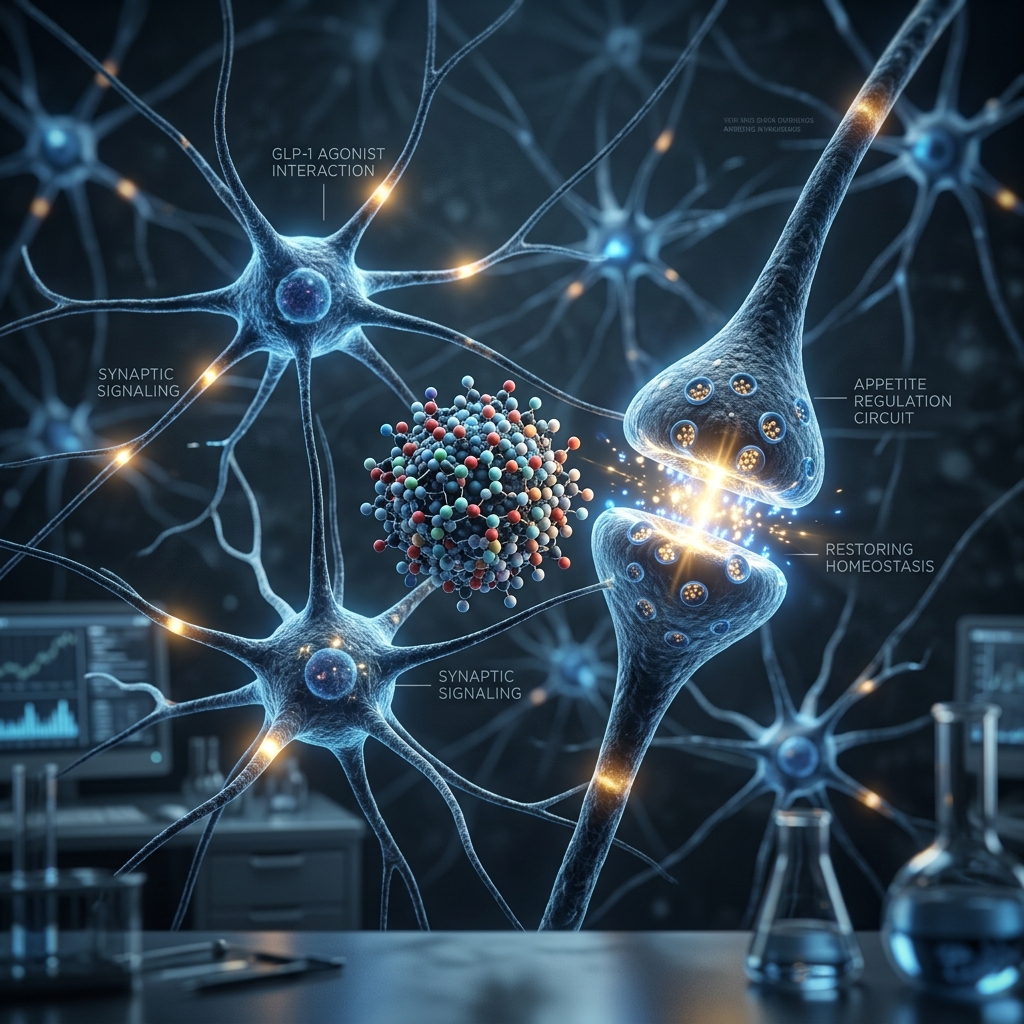
For decades, the medical community treated obesity and depression as two separate, isolated conditions. Psychiatrists prescribed SSRIs to manage the mood, while general practitioners prescribed generic diets to manage the weight. The tragedy of this fragmented approach is that it completely ignored the biological reality: the brain and the gut are inextricably linked.
The advent of GLP-1 receptor agonists (Semaglutide and Tirzepatide) has forcefully reunited psychiatry and endocrinology. While marketed purely as weight-loss drugs, these peptides cross the blood-brain barrier and directly alter the neurological pathways responsible for addiction, anxiety, and depression.
In this 5,000-word clinical analysis, we explore the profound psychiatric effects of incretin therapy. We dissect the bidirectional link between systemic inflammation and major depressive disorder, analyze the phenomenon of "food noise" eradication, and provide a rigid safety framework for patients navigating the complex intersection of metabolic medication and mental health.
The Neurological Definition of "Food Noise"
The most universally reported, yet least clinically understood, effect of GLP-1 therapy is the sudden silencing of "food noise."
Patients suffering from severe obesity frequently describe a relentless, intrusive inner monologue obsessed with food. They are thinking about their next meal while currently eating a meal. This is not a lack of willpower; it is a state of severe neurological hyper-arousal driven by a broken dopamine reward system in the mesolimbic pathway of the brain. The brain is literally starved for a dopamine hit, and it knows that highly palatable, processed carbohydrates provide the fastest delivery.
The GLP-1 Chemical Override
GLP-1 medications physically cross the blood-brain barrier and bind to receptors in the hypothalamus and the ventral tegmental area (VTA). By agonizing these receptors, the medication artificially regulates the dopamine spike.
Because the brain is no longer experiencing extreme dopamine crashes, the relentless craving for a "hit" of food completely evaporates. The food noise is silenced. For many patients, this is the first time in their adult lives they experience true psychological quiet. This is the exact same mechanism currently being studied to treat Alcohol Use Disorder, which we detail in our analysis of GLP-1 and Alcohol Interactions.
Experience Psychological Quiet
If intrusive food noise is dictating your life, you need a neurological reset. Connect with a clinician to evaluate if GLP-1 therapy is right for you.
The Bidirectional Link: Obesity and Depression
The relationship between severe obesity and clinical depression is bidirectional. Being depressed makes you more likely to gain weight (often exacerbated by the weight-gain side effects of SSRIs), and gaining weight makes you biologically more likely to become depressed.
The Role of Systemic Inflammation
Visceral fat (the deep abdominal fat that wraps around your organs) is not just stored energy. It is an active endocrine organ that pumps massive amounts of inflammatory cytokines (like IL-6 and TNF-alpha) directly into your bloodstream.
Modern psychiatry now recognizes the "Inflammatory Model of Depression." When these cytokines cross the blood-brain barrier, they trigger severe neuroinflammation. This neuroinflammation directly impairs the brain's ability to synthesize serotonin and dopamine, inducing a chemical state of clinical depression.
When a patient utilizes a GLP-1 to rapidly strip away the visceral fat, they are simultaneously stripping away the source of the neuroinflammation. As the systemic inflammation plummets, the brain's ability to produce serotonin recovers. This is why many patients report a profound lifting of their "brain fog" and depressive symptoms within the first few months of therapy, entirely independent of the psychological boost of losing weight.
The Danger of Anhedonia
While GLP-1s brilliantly suppress the dopamine reward for overeating, they can occasionally suppress the dopamine reward for everything. A small subset of patients report experiencing "anhedonia"—a total loss of pleasure or interest in previously enjoyable activities (hobbies, socializing, intimacy). If you suddenly feel emotionally "flat" or completely numb while on a GLP-1, this is a neurological side effect of the medication capping your dopamine receptors too aggressively. You must immediately contact your prescribing clinician to adjust your titration schedule.
Navigating SSRI Interactions
Millions of patients pursuing GLP-1 therapy are concurrently taking psychiatric medications (SSRIs, SNRIs, or antipsychotics). Because GLP-1 medications drastically delay gastric emptying, they fundamentally alter how your body absorbs oral medications.
If you take an oral antidepressant, the GLP-1 will cause that pill to sit in your stomach for significantly longer before entering the intestines for absorption. This can lead to unpredictable blood serum levels of your psychiatric medication. You may experience withdrawal-like symptoms (brain zaps, sudden anxiety spikes) because the antidepressant is absorbing too slowly. It is absolutely critical that you do not utilize "rogue" telehealth mills; you must work with a comprehensive clinician who will actively monitor your psychiatric medication levels while titrating your GLP-1.
Safe, Monitored Clinical Care
If you are currently taking psychiatric medication, you require elite medical oversight during your weight loss journey to monitor drug absorption rates.
The Psychological Identity Shift
Finally, we must address the profound psychological shock of rapid, massive weight loss. Many patients have tied their entire identity and defensive coping mechanisms to their size.
When a patient loses 80 pounds in under a year on Tirzepatide, they frequently experience a profound identity crisis. They may face sudden, unprompted attention from strangers that feels deeply uncomfortable. They may realize that their previous social circles were entirely built around the shared activity of binge eating, leaving them socially isolated. GLP-1 therapy is a biological miracle, but it does not replace the need for cognitive behavioral therapy to navigate the new reality of a radically altered body.
Transform Your Mind and Body
Stop fighting a chemical imbalance with pure willpower. Address the biological root of your food noise.
TelehealthFX provides U.S.-licensed, quality-verified compounded Semaglutide and Tirzepatide with strict physician oversight. Learn how to identify safe providers in our guide to spotting Hidden Fees in Telehealth.
Final Clinical Verdict
The separation of psychiatry and metabolic endocrinology is officially over. GLP-1 receptor agonists are profound neurological tools. By crossing the blood-brain barrier, they silence the dopamine-driven "food noise" that tortures millions of patients, and by rapidly clearing visceral fat, they eradicate the neuroinflammation that acts as the biological engine for clinical depression. However, patients must remain hyper-vigilant regarding the delayed absorption of their existing psychiatric medications and the rare risk of chemical anhedonia, requiring strict, ongoing clinical oversight.
- Luppino, F. S., et al. (2010). "Overweight, obesity, and depression: a systematic review and meta-analysis of longitudinal studies." Archives of General Psychiatry, 67(3), 220-229. https://jamanetwork.com/journals/jamapsychiatry/fullarticle/210608
- Capuron, L., & Miller, A. H. (2011). "Immune system to brain signaling: neuropsychopharmacological implications." Pharmacology & Therapeutics, 130(2), 226-238. https://www.ncbi.nlm.nih.gov/pmc/articles/PMC3073098/
- Skibicka, K. P., et al. (2012). "Glucagon-like peptide 1 receptor induced suppression of food intake, and body weight is mediated by central IL-1 and IL-6." PNAS, 109(8), 3047-3052. https://www.pnas.org/doi/full/10.1073/pnas.1118321109