
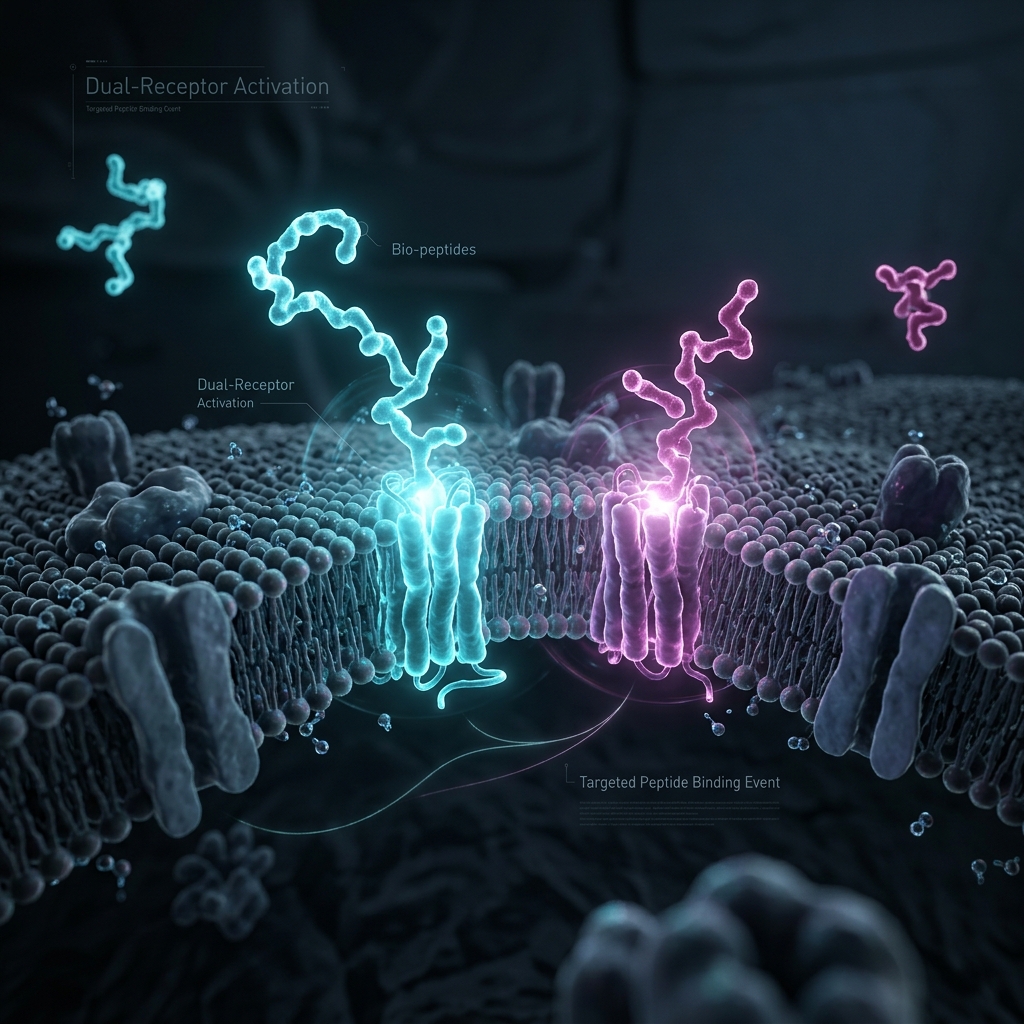
In the timeline of metabolic medicine, Semaglutide (Ozempic/Wegovy) represents a historic milestone—the first non-surgical intervention capable of driving consistent, double-digit percentage weight loss. However, pharmaceutical engineering does not stagnate. Just as the medical community began to standardize single-receptor GLP-1 therapies, a new, vastly more complex molecule disrupted the entire paradigm: Tirzepatide (marketed as Mounjaro® and Zepbound®).
Unlike Semaglutide, which rigidly targets a single metabolic pathway, Tirzepatide is a "twincreatin"—a dual-acting, synthetic peptide engineered to agonize two distinct endocrine receptors simultaneously. This dual-agonist mechanism has yielded clinical trial data that shatters previous records, demonstrating weight loss outcomes that rival invasive bariatric surgery. In this exhaustive clinical breakdown, we dissect the cellular architecture of Tirzepatide, map the synergistic interplay between GIP and GLP-1 receptors, and explain exactly why dual-agonism is rendering older, single-target therapies obsolete.
The Incretin Foundation: Single vs. Dual Agonism
To grasp the superiority of Tirzepatide, we must quickly revisit the biological incretin system. As we detailed in our guide on The Pharmacokinetics of Semaglutide, incretins are hormones released by the gastrointestinal tract in response to nutrient intake. Their primary function is to signal the pancreas to secrete insulin, thereby preparing the body to process incoming glucose.
Semaglutide is a mono-agonist. It is a synthetic analog designed to mimic only one of these incretin hormones: Glucagon-Like Peptide-1 (GLP-1). By agonizing the GLP-1 receptor, Semaglutide violently suppresses appetite in the hypothalamus, delays gastric emptying, and stimulates insulin release. It is highly effective, but it is fundamentally a unilateral assault on metabolic dysfunction.
Tirzepatide is a dual-agonist. It was synthesized from the ground up to mimic two distinct incretin hormones simultaneously: GLP-1 and Glucose-Dependent Insulinotropic Polypeptide (GIP). It is this integration of GIP that elevates Tirzepatide into an entirely new class of metabolic therapeutics.
Ready to Upgrade Your Metabolism?
If you are ready to utilize the most advanced dual-agonist peptide therapy on the market, access quality-verified compounded Tirzepatide today.
The Resurrection of GIP (Glucose-Dependent Insulinotropic Polypeptide)
For decades, pharmaceutical companies largely ignored GIP. Early clinical research in the 1990s suggested that in patients with severe Type 2 Diabetes, the GIP receptors in the pancreas had become entirely "deaf" to the hormone. If the body was no longer responding to native GIP, researchers assumed there was no clinical value in creating a synthetic version of it. Therefore, all research and development funding was funneled into GLP-1.
However, modern endocrinologists discovered a critical biological loophole: the "deafness" of the GIP receptor is not permanent. It is merely suppressed by hyperglycemia (chronically high blood sugar). If you can lower a patient's blood sugar using a GLP-1 agonist, the GIP receptors "wake up" and regain their sensitivity.
This is the foundational logic behind Tirzepatide. By combining GLP-1 and GIP into a single, unified peptide, the GLP-1 component immediately suppresses postprandial glucose spikes, thereby reactivating the GIP receptors and allowing the GIP component to bind successfully. This creates a profound synergistic cascade.
The Synergistic Cascade: How Dual Agonism Accelerates Fat Loss
When Tirzepatide binds to both the GLP-1 and GIP receptors across the body, it initiates a series of metabolic reactions that Semaglutide cannot achieve on its own.
Adipose Tissue (Fat Cell) Remodeling
The most critical advantage of Tirzepatide over Semaglutide is its direct action on adipose tissue. While GLP-1 receptors are largely absent in human fat cells, GIP receptors are highly expressed on the surface of adipocytes (white fat cells).
When the GIP component of Tirzepatide binds to these fat cells, it drastically increases their insulin sensitivity and promotes lipid buffering. It essentially forces large, insulin-resistant fat cells to break down and remodel into smaller, metabolically flexible fat cells. Furthermore, GIP agonism heavily stimulates blood flow to adipose tissue, allowing for significantly higher rates of lipolysis (fat burning) when the patient is in a caloric deficit. Semaglutide cannot perform this direct cellular remodeling.
Neurological Synergy: The Glucagon Buffer
As we discussed in our breakdown of Ozempic and Insulin Resistance, GLP-1 aggressively suppresses glucagon (the hormone that raises blood sugar). However, aggressive glucagon suppression can sometimes lead to mild nausea and severe lethargy, which are the most common reasons patients abandon Semaglutide therapy.
GIP acts as a neurological buffer. While GLP-1 violently suppresses glucagon, GIP actually has a mild glucagonotropic effect (it slightly stimulates glucagon in specific, fasting states). This delicate "push-pull" dynamic prevents blood sugar from dropping too rapidly, resulting in a vastly superior tolerability profile. Clinical data shows that patients on high doses of Tirzepatide experience significantly less nausea and fatigue than patients on equivalent doses of Semaglutide. We cover management strategies for these specific reactions in our guide to Managing GLP-1 Side Effects.
Experience Superior Clinical Tolerability
Tirzepatide's dual-action mechanism is clinically proven to reduce the nausea and fatigue commonly associated with first-generation GLP-1 therapies.
The Molecular Engineering of Tirzepatide
Creating a single molecule that can perfectly bind to two completely different receptors is an act of extreme chemical engineering. The molecular structure of Tirzepatide is heavily based on the native GIP peptide sequence, but with critical, proprietary modifications to grant it GLP-1 affinity and protect it from rapid degradation.
The Imbalanced Binding Affinity
Tirzepatide is often referred to as an "imbalanced" dual-agonist. This is intentional. The molecule is engineered to have an affinity for the GIP receptor that is mathematically identical to native human GIP. However, its affinity for the GLP-1 receptor is intentionally weakened—it binds to the GLP-1 receptor at roughly 20% the strength of native GLP-1.
This intentional imbalance is the key to its tolerability. Because the GLP-1 binding is slightly muted, it avoids triggering the severe nausea centers in the brain, while allowing the fully-powered GIP component to drive aggressive fat-cell remodeling and metabolic regulation.
The C-20 Fatty Diacid Anchor
Just like Semaglutide, Tirzepatide must be armored against the DPP-4 enzyme to survive in the bloodstream. However, instead of using the C-18 fatty acid diacid found in Semaglutide, Tirzepatide utilizes a massive C-20 fatty diacid attachment, linked via a sophisticated hydrophilic spacer.
This C-20 anchor binds incredibly tightly to circulating Albumin proteins in the blood. This macromolecular anchoring prevents the Tirzepatide peptide from being filtered out by the kidneys and extends its half-life to roughly 116 hours (nearly 5 days), allowing for the standard once-weekly subcutaneous dosing schedule.
The SURMOUNT Clinical Trials
The clinical superiority of Tirzepatide over Semaglutide is not theoretical; it is definitively proven in the SURMOUNT Phase 3 clinical trials. In head-to-head data, patients utilizing the highest dose of Tirzepatide (15mg) achieved an unprecedented average body weight reduction of up to 22.5% over 72 weeks. This obliterates the 15% average ceiling historically seen with Semaglutide (Wegovy). Tirzepatide is currently the most powerful weight-loss therapeutic ever brought to market.
The Clinical Reality: Choosing Between the Two
With the advent of Tirzepatide, the medical community must now navigate a tiered approach to obesity and metabolic syndrome.
Semaglutide remains an exceptional, gold-standard intervention. It is highly effective for eradicating food noise, reversing insulin resistance, and driving significant weight loss. However, for patients suffering from profound, treatment-resistant obesity—or patients who experience severe, unmanageable nausea on Semaglutide—Tirzepatide is the undeniable upgrade.
The addition of GIP agonism provides a direct mechanism to remodel stubborn adipose tissue while neurologically buffering the harsh side effects of GLP-1.
However, the extreme catabolic power of Tirzepatide comes with a dire warning. Rapid, 20%+ body weight loss will indiscriminately strip lean muscle mass alongside adipose tissue if not aggressively managed. Patients transitioning to Tirzepatide must consume massive amounts of bioavailable protein and engage in heavy resistance training to protect their basal metabolic rate. We outline these non-negotiable protocols in our clinical playbook: GLP-1 Muscle Loss Prevention.
Transition to Dual-Agonist Therapy
If you have stalled on Semaglutide or require the most advanced metabolic intervention available, it is time to upgrade to Tirzepatide.
TelehealthFX provides U.S.-licensed, quality-verified compounded Tirzepatide with strict clinician oversight. No extreme markups. No hidden membership fees. Just real science and physiological results. Ensure you are choosing a safe provider by reading our guide to spotting Hidden Fees in Telehealth.
Final Verdict on the Twincreatin Era
Tirzepatide is a masterpiece of molecular design. By ignoring the dogma that GIP receptors were permanently "deaf" in metabolically compromised patients, engineers created a peptide that uses GLP-1 to kick open the metabolic door, allowing GIP to rush in and aggressively remodel fat tissue from the inside out.
While Semaglutide normalized medical weight loss, Tirzepatide has fundamentally rewritten the ceiling of what pharmacological intervention can achieve. The era of single-target agonism is ending; the era of multi-receptor synergism has arrived.
- Jastreboff, A. M., et al. (2022). "Tirzepatide Once Weekly for the Treatment of Obesity." The New England Journal of Medicine, 387(3), 205-216. https://www.nejm.org/doi/full/10.1056/NEJMoa2206038
- Coskun, T., et al. (2018). "Tirzepatide is a novel, gastric inhibitory polypeptide receptor and glucagon-like peptide-1 receptor dual agonist." Molecular Metabolism, 18, 3-14. https://pubmed.ncbi.nlm.nih.gov/30473097/
- Frias, J. P., et al. (2021). "Tirzepatide versus Semaglutide Once Weekly in Patients with Type 2 Diabetes." The New England Journal of Medicine, 385(6), 503-515. https://www.nejm.org/doi/full/10.1056/NEJMoa2107519
- Finan, B., et al. (2016). "A rationally designed monomeric peptide triagonist corrects obesity and diabetes in rodents." Nature Medicine, 21(1), 27-36. https://pubmed.ncbi.nlm.nih.gov/25485906/