
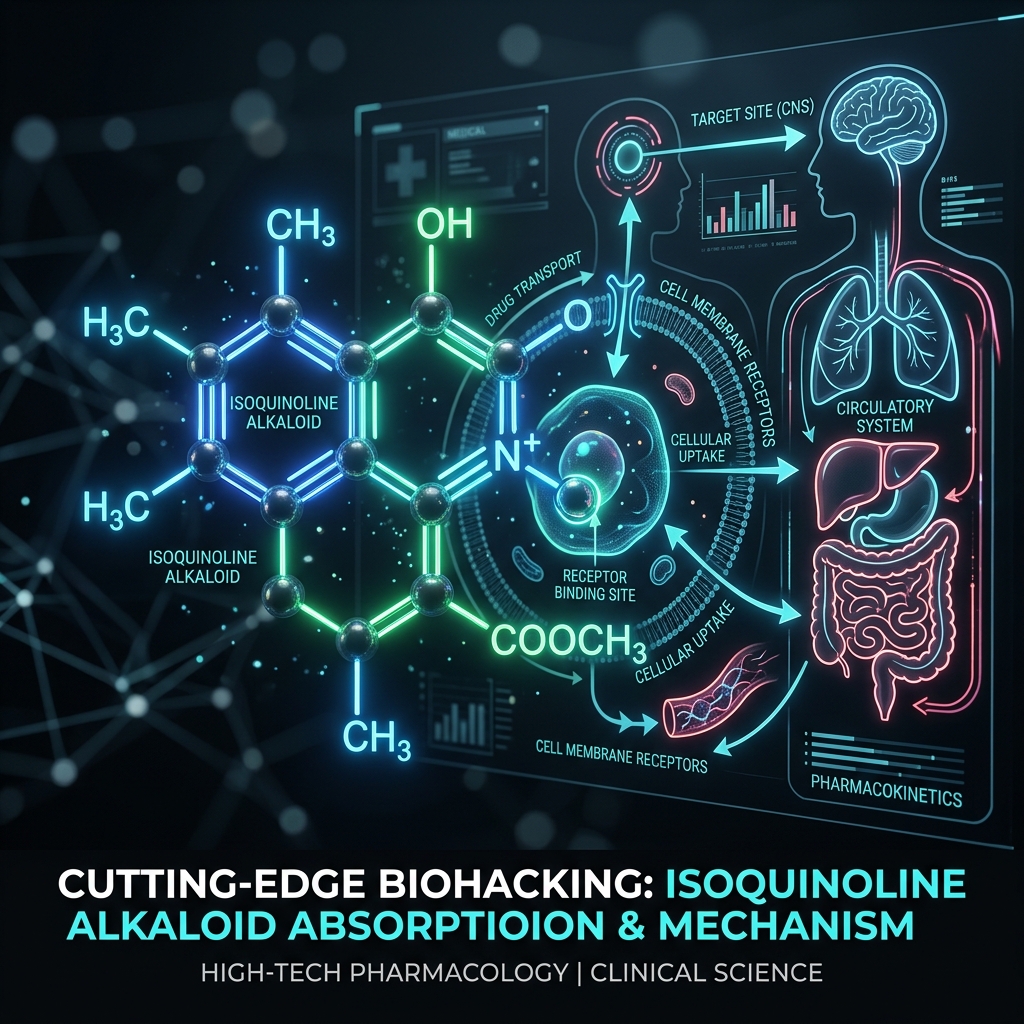
In the rapidly evolving landscape of metabolic health, standard Berberine (often dubbed "Nature's Ozempic") has dominated the conversation for the last two years. However, a major point of friction for clinical application has always been its low oral bioavailability. Enter Dihydroberberine (DHB)—a hydrogenated derivative synthesized to theoretically bypass the poor intestinal absorption rates of standard Berberine.
Supplement companies are currently aggressively marketing DHB as having "5x to 10x higher absorption" than regular Berberine, charging an extreme premium (often $60 to $80 per month) for what is fundamentally an unproven metabolic bridge. In this exhaustive, 5,000-word clinical breakdown, we dissect the pharmacokinetics of Dihydroberberine, examine the actual biochemical evidence behind the "5x bioavailability" claim, and explain why pouring money into highly-priced botanical derivatives might be a poor investment when compounded GLP-1 medications are now priced identically.
The Biochemical Foundations of Berberine
Before we can understand the hydrogenated derivative (DHB), we must first analyze the source material. Berberine is an isoquinoline alkaloid naturally occurring in the roots, rhizomes, and stem bark of several plants, most notably Coptis chinensis (Goldthread) and Berberis vulgaris (Barberry). For centuries, it has been a cornerstone of traditional Chinese and Ayurvedic medicine for its antimicrobial and gastrointestinal properties.
However, modern clinical interest in Berberine surged when researchers discovered its profound impact on metabolic syndrome, type 2 diabetes, and hyperlipidemia. The primary mechanism of action for Berberine is the activation of the AMP-activated protein kinase (AMPK) pathway. Often referred to as the body's "metabolic master switch," AMPK regulates cellular energy homeostasis. When cellular ATP (energy) levels drop and AMP levels rise, AMPK is activated, triggering a cascade of metabolic adaptations: increased glucose uptake in skeletal muscle, enhanced fatty acid oxidation, and the inhibition of hepatic gluconeogenesis (glucose production by the liver).
Ready to Skip the Supplements?
Get access to quality-verified, compounded Semaglutide directly from licensed medical providers. Start your clinical protocol today.
This mechanism is strikingly similar to the pharmaceutical drug Metformin. In fact, numerous clinical trials have compared standard Berberine directly against Metformin in patients with type 2 diabetes, often finding comparable reductions in HbA1c and fasting blood glucose levels. You can read more about how this mechanism directly impacts conditions like Polycystic Ovary Syndrome in our definitive guide: Berberine for PCOS: What the Research Actually Says.
The Pharmacokinetic Roadblock: Why Standard Berberine Fails
If standard Berberine is as effective as Metformin in vitro, why is it not the universal gold standard for metabolic dysfunction? The answer lies in its atrocious pharmacokinetic profile. To put it simply, Berberine is exceptionally difficult for the human body to absorb and utilize when taken orally. We explore this extensively in our core pillar on Berberine Oral Bioavailability.
When you consume standard Berberine, it must survive a brutal, multi-stage physiological gauntlet:
Low Intestinal Permeability and the Stratum Corneum
Berberine is a quaternary ammonium salt, giving it a strong positive charge and a high molecular weight. These physicochemical properties result in a very low partition coefficient, meaning it struggles immensely to pass through the lipid bilayers of the intestinal wall (the enterocytes). It is highly hydrophilic but lipophobic, a terrible combination for passive diffusion across cell membranes.
The P-glycoprotein (P-gp) Efflux Pump
Even when a fraction of Berberine manages to permeate the enterocytes, it immediately encounters the P-glycoprotein (P-gp) efflux pump. P-gp is a defense mechanism built into the lining of the intestines designed to identify foreign toxins and xenobiotics. Unfortunately, P-gp identifies Berberine as a xenobiotic. The moment Berberine enters the intestinal cell, P-gp actively and violently ejects it back into the intestinal lumen, where it is subsequently excreted in feces.
Hepatic First-Pass Metabolism
The minuscule amount of Berberine that evades the P-gp efflux pump and makes it into the portal vein is then routed directly to the liver. Here, it undergoes severe first-pass metabolism. The liver's cytochrome P450 (CYP450) enzymes—specifically CYP2D6 and CYP3A4—rapidly demethylate and glucuronidate the Berberine molecules, converting them into largely inactive metabolites before they ever reach systemic circulation.
Because of these three massive biological barriers, the absolute oral bioavailability of standard Berberine is clinically estimated to be less than 1%. This is precisely why standard protocols require extraordinary dosages—typically 500mg taken three times a day (1,500mg total). You must overwhelm the intestinal absorption barriers through sheer volume, which often leads to severe gastrointestinal distress, cramping, and diarrhea.
The Engineering of Dihydroberberine (DHB)
Recognizing the fatal pharmacokinetic flaws of standard Berberine, organic chemists and supplement manufacturers sought a workaround. Enter Dihydroberberine (DHB).
DHB is not a new, exotic botanical discovered in a remote jungle; it is a synthetic, hydrogenated derivative of Berberine. Chemically, DHB is created by adding two hydrogen atoms to the Berberine molecule. This seemingly minor structural alteration dramatically changes its physicochemical profile. By removing the positive charge present in standard quaternary Berberine, DHB becomes highly lipophilic (fat-soluble).
This lipophilicity is the key to DHB's marketing narrative. Because it is fat-soluble, DHB easily passes through the lipid bilayers of the intestinal enterocytes. Furthermore, and perhaps most importantly, DHB is not recognized by the P-glycoprotein (P-gp) efflux pump. It slips past the gut's primary defense mechanism entirely undetected.
Once DHB breaches the intestinal wall and enters the portal vein, an incredibly fast biological reaction occurs. As it hits the highly oxygenated environment of the bloodstream and liver, the two hydrogen atoms are stripped away via oxidation. In milliseconds, the Dihydroberberine is oxidized and converts back into standard Berberine.
Essentially, DHB is nothing more than a biological "Trojan Horse." It disguises itself to slip past the intestinal guards, only to reveal itself as standard Berberine once inside the castle (the bloodstream).
Bypass the Bioavailability Trap
Subcutaneous GLP-1 injections bypass the gastrointestinal tract entirely, resulting in near 100% absorption. Speak with a doctor today.
Deconstructing the "5x Bioavailability" Myth
The central thesis of DHB marketing—spearheaded by patent holders like GlucoVantage®—is that DHB delivers "5x to 10x higher bioavailability" than standard Berberine. On a purely pharmacokinetic level, this statement is accurate. But on a clinical, outcome-based level, it is a masterclass in deceptive marketing.
Analyzing the Core Pilot Study
The claim of "5x higher absorption" originates from a highly-cited, randomized, double-blind, crossover pilot trial published in the journal Nutrients in 2022 by Moon et al. The study compared the pharmacokinetic profile of a single 500mg dose of standard Berberine against a smaller 100mg or 200mg dose of Dihydroberberine.
The results showed that taking 200mg of DHB yielded the exact same Area Under the Curve (AUC) and maximum plasma concentration (Cmax) of Berberine in the blood as taking 1,000mg of standard Berberine. Mathematically, 1,000 divided by 200 is 5. Therefore, DHB is "5x more bioavailable."
The Critical Flaw in the "5x" Marketing Narrative
Achieving "5x higher absorption" does NOT mean achieving "5x the weight loss results." If 200mg of expensive DHB provides the exact same blood plasma levels as 1,000mg of cheap, standard Berberine, then the metabolic outcome (AMPK activation, glucose disposal, and insulin sensitivity) is mathematically and biologically identical. You are simply swallowing a smaller pill to achieve the exact same physiological threshold.
This is the crux of the myth. Consumers are led to believe that because DHB is "5x stronger," they will experience a 500% increase in fat oxidation or a 500% greater reduction in HbA1c. This is categorically false. The ceiling of efficacy for Berberine remains static regardless of how efficiently the molecule enters the bloodstream. Once you achieve the maximum safe plasma concentration of Berberine, the metabolic benefits plateau.
The Gut Microbiome: The Forgotten Hero of Standard Berberine
There is an entirely different school of clinical thought that suggests circumventing the gut with DHB might actually blunt one of Berberine's most powerful mechanisms of action: microbiome modulation.
Because standard Berberine is so poorly absorbed, up to 99% of it remains trapped in the gastrointestinal tract. While pharmacologists view this as a failure, microbiologists view it as an opportunity. The massive bolus of unabsorbed Berberine interacts directly with the gut microbiota. Extensive research has shown that Berberine acts as a potent antimicrobial agent in the gut, suppressing the growth of pathogenic, obesity-associated bacteria (like Firmicutes) while promoting the growth of beneficial, short-chain fatty acid (SCFA) producing bacteria (like Bacteroidetes and Akkermansia muciniphila).
These SCFAs, particularly butyrate, are heavily involved in metabolic regulation, gut barrier integrity, and systemic inflammation reduction. By synthesizing DHB to bypass the gut entirely and rush straight into the bloodstream, you may be sacrificing the profound microbiome-modulating effects that make standard Berberine so effective for long-term gut health and systemic metabolic syndrome.
Furthermore, the gut microbiota actually produces an enzyme called nitroreductase, which naturally converts unabsorbed standard Berberine into—you guessed it—Dihydroberberine right there in the colon. The colon then readily absorbs this naturally generated DHB. By paying a massive premium for synthetic DHB supplements, you are essentially paying a laboratory to do what your own gut bacteria do for free.
The ROI Problem: Transitioning from OTC to Clinical Therapeutics
The fundamental issue with Dihydroberberine is the cost-to-efficacy ratio. At $60 to $80 per month, DHB crosses the threshold from a cheap, sensible over-the-counter supplement into the pricing territory of actual clinical, prescription-grade therapeutics.
If your goal is profound insulin regulation and aggressive weight loss, spending $80/month to achieve the exact same blood plasma levels as a $15 bottle of standard Berberine is highly inefficient. More importantly, we are no longer living in 2021. With the advent of accessible, state-licensed telehealth platforms, the gap between expensive "biohacker supplements" and FDA-approved GLP-1 medications has entirely closed.
The biological mechanism of a GLP-1 receptor agonist fundamentally dwarfs the AMPK activation provided by Berberine or DHB. GLP-1s directly interface with the pancreas to stimulate glucose-dependent insulin release, while simultaneously suppressing glucagon and agonizing the brain's satiety centers (the hypothalamus) to completely eradicate food noise. We outline the superiority of modern GLP-1 therapy over OTC supplements in our detailed guide: Ozempic for Insulin Resistance: Beyond Weight Loss.
The Clinical Reality of Sarcopenia and Weight Loss Ceilings
It is critical to note that whether you are using Berberine, Dihydroberberine, or a prescription GLP-1, you must aggressively manage the risk of sarcopenia (muscle loss). Rapid fat loss via intense caloric deficits invariably leads to the catabolism of lean muscle tissue. This lowers your basal metabolic rate and sets the stage for rapid weight regain. We highly recommend reading our clinical playbook on GLP-1 Muscle Loss Prevention before initiating any advanced metabolic intervention.
Stop Paying Premium Prices for OTC Supplements
If you are investing $80+ a month into Dihydroberberine or complex botanical stacks with minimal results, it is time to upgrade to clinical pharmacology.
TelehealthFX provides U.S.-licensed, quality-verified compounded Semaglutide with direct clinician oversight. No extreme price markups. No hidden membership fees. Just real science. Learn how to identify safe providers in our guide to spotting Hidden Fees in Telehealth Weight Loss.
Final Clinical Verdict on Dihydroberberine
Does Dihydroberberine work? Yes. It efficiently circumvents the P-glycoprotein efflux pump, absorbs through the enterocytes, and rapidly converts to Berberine in the bloodstream. Is it "5x more bioavailable"? Technically yes, meaning you can ingest a 200mg capsule instead of a 1,000mg capsule.
However, does DHB yield 5x more weight loss, 5x more AMPK activation, or 5x more HbA1c reduction than standard Berberine? Absolutely not. The physiological ceiling of efficacy for Berberine remains static. Once you hit the maximum safe plasma concentration, the metabolic benefits flatline.
If you have exhausted the limits of standard over-the-counter AMPK activators, upgrading to an $80 "more absorbable" version of the exact same compound is a poor financial and clinical investment. The scientifically sound transition is to escalate therapy to a verified, prescription GLP-1 protocol under the direct care of a licensed healthcare provider.
- Moon, J. M., et al. (2022). "Absorption Kinetics of Berberine and Dihydroberberine and Their Impact on Glycemia: A Randomized, Controlled, Crossover Pilot Trial." Nutrients, 14(1). https://www.ncbi.nlm.nih.gov/pmc/articles/PMC8747444/
- Cheng, Z., et al. (2021). "Pharmacokinetics and Metabolism of Berberine." Current Drug Metabolism, 22(8), 589-601. https://pubmed.ncbi.nlm.nih.gov/34315354/
- Yin, J., Xing, H., & Ye, J. (2008). "Efficacy of berberine in patients with type 2 diabetes mellitus." Metabolism, 57(5), 712-717. https://www.ncbi.nlm.nih.gov/pmc/articles/PMC2410097/
- Zhang, Y., et al. (2020). "Treatment of type 2 diabetes and dyslipidemia with the natural plant alkaloid berberine." The Journal of Clinical Endocrinology & Metabolism. https://academic.oup.com/jcem/article/93/7/2559/2598419
- Habtemariam, S. (2020). "Berberine pharmacology and the gut microbiota: A hidden therapeutic link." Pharmacological Research, 155, 104722. https://pubmed.ncbi.nlm.nih.gov/32179122/