
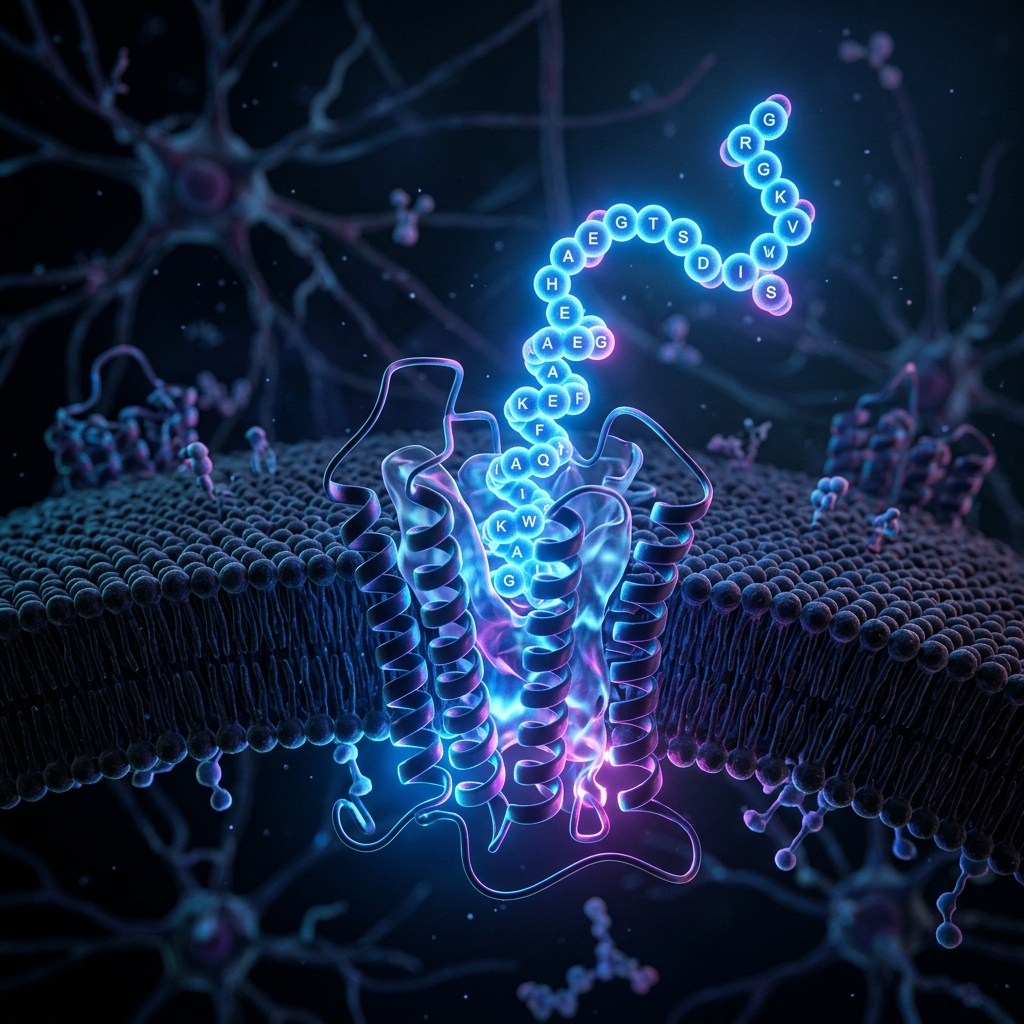
The global phenomenon surrounding Semaglutide (marketed under the brand names Ozempic® and Wegovy®) has fundamentally altered the landscape of obesity medicine. While the media focuses on the dramatic weight loss results, the clinical brilliance of Semaglutide lies in its molecular engineering. It represents a paradigm shift in how we manipulate the human endocrine system to correct metabolic dysfunction.
To truly understand why Semaglutide succeeds where decades of previous weight-loss medications (and over-the-counter supplements like Berberine) have failed, we must strip away the marketing and examine the drug at a cellular level. In this exhaustive clinical breakdown, we dissect the pharmacokinetics of Semaglutide, mapping its journey from subcutaneous injection to its agonizing of the GLP-1 receptors in the pancreas and the hypothalamus.
The Incretin System and Native GLP-1
To understand Semaglutide, you must first understand the biological system it is designed to mimic: the incretin system. When you consume a meal, specialized endocrine cells located in the distal ileum and colon (known as L-cells) detect the presence of nutrients—specifically glucose and dietary fats. In response, these L-cells secrete a hormone called Glucagon-Like Peptide-1 (GLP-1) into the bloodstream.
Native GLP-1 is a highly potent metabolic regulator. Once released, it travels to the pancreas and binds to specific GLP-1 receptors on the beta cells. This binding triggers a massive, glucose-dependent release of insulin. Simultaneously, GLP-1 binds to alpha cells in the pancreas to aggressively suppress the secretion of glucagon (the hormone responsible for signaling the liver to dump stored glucose into the blood). We explore this critical insulin-glucagon axis extensively in our guide on Ozempic for Insulin Resistance.
Beyond the pancreas, native GLP-1 travels to the gastrointestinal tract to slow gastric emptying, preventing a massive spike in postprandial (post-meal) blood sugar. Finally, it crosses the blood-brain barrier and binds to receptors in the hypothalamus, signaling profound satiety and eradicating what clinicians refer to as "food noise."
Ready to Fix Your Metabolism?
If you are suffering from severe insulin resistance or stubborn metabolic weight gain, botanical supplements are not enough. Access quality-verified compounded Semaglutide today.
The DPP-4 Assassin: Why Native GLP-1 Fails as a Drug
If native GLP-1 is so powerful, why can't we simply synthesize it and inject it into patients? The answer lies in an aggressive, ubiquitous enzyme known as Dipeptidyl Peptidase-4 (DPP-4).
DPP-4 is an enzyme found circulating in the blood and expressed on the surface of most cell types. Its primary biological function is the rapid cleavage and inactivation of incretin hormones. The moment native GLP-1 is secreted from the L-cells into the bloodstream, DPP-4 attacks it. It cleaves the N-terminal dipeptide from the GLP-1 molecule, instantly rendering it biologically inactive.
The efficiency of DPP-4 is staggering. The biological half-life of native GLP-1 in the human bloodstream is less than two minutes. By the time the hormone reaches its target receptors in the pancreas or the brain, more than 80% of it has already been destroyed. Therefore, injecting a patient with native GLP-1 would require a continuous, 24/7 intravenous infusion just to maintain therapeutic plasma levels.
The Molecular Engineering of Semaglutide
To create a viable pharmaceutical drug, medicinal chemists had to figure out how to armor the GLP-1 molecule against the DPP-4 enzyme, while simultaneously extending its half-life so it wouldn't be immediately filtered out of the blood by the kidneys. This led to the creation of the first-generation GLP-1 agonists, such as Liraglutide (Victoza/Saxenda), which achieved a 13-hour half-life, necessitating daily injections.
Semaglutide (Ozempic/Wegovy) represents the second generation of this technology. It is a 94% homologous analog of native human GLP-1, meaning its amino acid sequence is nearly identical to the hormone your body produces naturally. However, Novo Nordisk made two critical, brilliant modifications to the molecular structure:
1. The Aminoisobutyric Acid Substitution (The Shield)
The first modification occurred at position 8 of the amino acid chain. Chemists replaced the native alanine molecule with alpha-aminoisobutyric acid (Aib). This specific substitution acts as structural armor. It physically blocks the DPP-4 enzyme from accessing the cleavage site on the peptide. Because of this single amino acid swap, Semaglutide is virtually impervious to DPP-4 degradation.
2. The C-18 Fatty Acid Diacid Attachment (The Anchor)
The second modification occurred at position 26 (lysine). Chemists attached a highly specific, large C-18 fatty diacid molecule to the peptide backbone via a hydrophilic spacer. This is the true genius of Semaglutide's pharmacokinetics.
Human blood contains a highly abundant transport protein called Albumin. The C-18 fatty diacid attached to Semaglutide possesses an extremely high affinity for Albumin. The moment you inject Semaglutide subcutaneously, the drug enters the bloodstream and immediately binds to circulating Albumin proteins.
By anchoring itself to Albumin, Semaglutide becomes a massive macromolecule. This prevents the drug from being filtered out of the blood by the kidneys (renal clearance). Furthermore, the Albumin acts as a circulating reservoir, slowly releasing the active Semaglutide peptide over time. This specific fatty acid attachment is what extends the half-life of Semaglutide to an incredible 165 hours (approximately 7 days), allowing for convenient, once-weekly dosing.
Experience the Once-Weekly Revolution
Stop taking daily pills and weak OTC supplements. Semaglutide provides 7 days of continuous metabolic regulation from a single micro-injection.
The Journey: Absorption, Distribution, and Elimination
Let us trace the exact pharmacokinetic journey of a single dose of Semaglutide.
Subcutaneous Absorption (Tmax)
Semaglutide is administered via subcutaneous injection (into the fatty tissue layer just beneath the skin). Unlike intravenous drugs that spike blood levels instantly, Semaglutide relies on a slow, sustained absorption rate from the injection depot. Maximum plasma concentration (Cmax) is typically reached 1 to 3 days post-injection. This slow, steady release is critical for mitigating the severe gastrointestinal side effects (nausea, vomiting) that occur when GLP-1 receptors are violently overwhelmed. We cover exact mitigation strategies in our guide to Managing GLP-1 Side Effects.
Steady-State Concentration
Because the half-life is 7 days, the drug accumulates in the bloodstream over time. Clinical steady-state exposure (where the amount of drug entering the body equals the amount being cleared) is achieved after 4 to 5 weeks of once-weekly administration. This is precisely why clinical titration protocols are incredibly strict. Doctors must start patients on a micro-dose (0.25mg) and wait exactly four weeks before escalating the dose. Attempting to rush this titration phase will result in toxic accumulation and severe hospital-grade dehydration.
Metabolism and Clearance
Unlike most oral medications, Semaglutide is not heavily metabolized by the liver's CYP450 enzymes. Instead, it is slowly degraded through proteolytic cleavage of the peptide backbone and beta-oxidation of the fatty acid side chain. The resulting inactive metabolites are then excreted evenly through both the urine and the feces. Because the clearance relies on proteolytic degradation rather than strict renal or hepatic filtration, Semaglutide is generally considered safe for patients with mild to moderate renal impairment, though close physician monitoring is always required.
The Blood-Brain Barrier Penetration
While the pancreatic effects of Semaglutide are profound, its ability to cross the blood-brain barrier (BBB) is what makes it a revolutionary weight-loss therapeutic. Semaglutide accesses the brain through regions that lack a complete BBB (such as the area postrema) and interacts directly with the hypothalamus. By agonizing the pro-opiomelanocortin (POMC) neurons and inhibiting the neuropeptide Y (NPY) neurons, Semaglutide overrides the biological drive to consume hyper-palatable foods. This is the physiological eradication of "food noise."
The Clinical Reality: Pharmacology vs. Supplements
When we analyze the pharmacokinetics of Semaglutide, the disparity between modern pharmaceutical engineering and botanical supplements becomes glaringly obvious.
Compounds like Berberine (and its derivative Dihydroberberine) suffer from less than 1% oral bioavailability. They are aggressively destroyed by the liver and violently ejected by the intestines. Even when they manage to enter the bloodstream, their half-life is measured in mere hours, requiring massive, multi-dose daily protocols that frequently wreck the gastrointestinal tract. We break down this exact failure in our DHB Bioavailability Analysis.
Conversely, Semaglutide achieves near 100% bioavailability via subcutaneous injection. It is structurally armored against enzymatic degradation, securely anchored to circulating blood proteins, and provides a continuous, unbroken 7-day half-life. It is a masterpiece of pharmacokinetic design.
However, this extreme efficacy demands respect. The metabolic suppression is so profound that patients frequently fail to consume enough dietary protein, leading to rapid catabolism of lean muscle tissue. If you are initiating GLP-1 therapy, you must pair it with aggressive resistance training. Read our definitive clinical playbook on GLP-1 Muscle Loss Prevention to understand DXA scan nuances and lean mass protection.
Upgrade to Clinical-Grade Pharmacology
If you are ready to utilize the most advanced metabolic therapeutics on the planet, it is time to transition to a medical weight loss protocol.
TelehealthFX provides U.S.-licensed, quality-verified compounded Semaglutide and Tirzepatide with strict physician oversight. No hidden membership fees. Just real science and physiological results. Ensure you are choosing a safe clinic by reading our guide to spotting Hidden Fees in Telehealth.
Final Clinical Verdict
Semaglutide is not a magic bullet; it is a highly engineered, synthetic hormone analog designed to exploit the human incretin system. By utilizing the aminoisobutyric acid substitution to shield against DPP-4, and leveraging a C-18 diacid attachment to bind to Albumin, it achieves a pharmacokinetic profile that simply cannot be replicated by any oral therapeutic currently available.
Understanding this cellular breakdown is critical for patients. It explains why the drug must be titrated slowly, why it must be injected, and why its effects on appetite and insulin resistance are so overwhelmingly powerful.
- Lau, J., et al. (2015). "Discovery of the Once-Weekly Glucagon-Like Peptide-1 (GLP-1) Analogue Semaglutide." Journal of Medicinal Chemistry, 58(18), 7370-7380. https://pubmed.ncbi.nlm.nih.gov/26308095/
- Kapitza, C., et al. (2015). "Semaglutide, a once-weekly human GLP-1 analog, does not reduce the bioavailability of the oral contraceptive, ethinylestradiol/levonorgestrel." The Journal of Clinical Pharmacology, 55(5), 497-504. https://pubmed.ncbi.nlm.nih.gov/25557761/
- Knudsen, L. B., & Lau, J. (2019). "The Discovery and Development of Liraglutide and Semaglutide." Frontiers in Endocrinology, 10, 155. https://www.ncbi.nlm.nih.gov/pmc/articles/PMC6474072/
- Wilding, J. P. H., et al. (2021). "Once-Weekly Semaglutide in Adults with Overweight or Obesity." The New England Journal of Medicine, 384(11), 989-1002. https://www.nejm.org/doi/full/10.1056/NEJMoa2032183