
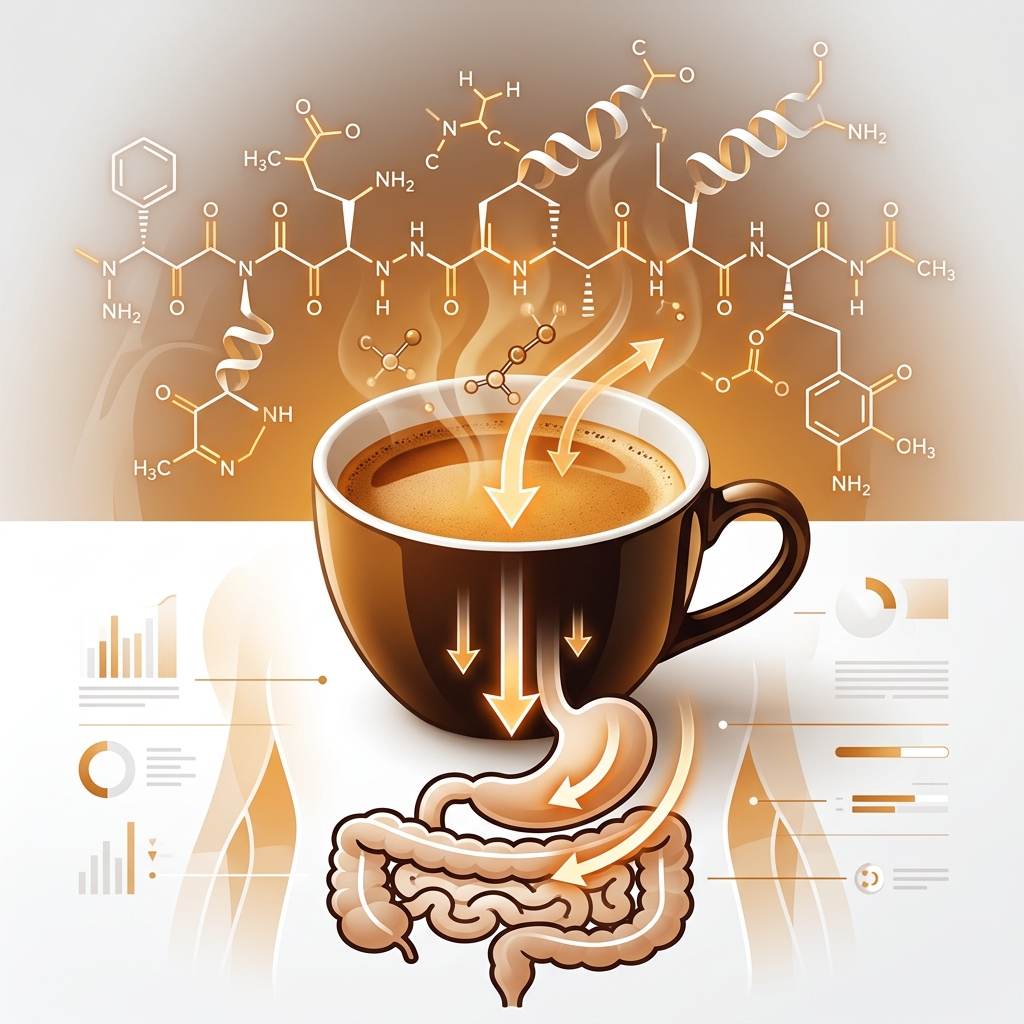
"Can I still drink coffee on Ozempic?" This is one of the most frequently asked questions in GLP-1 forums, Reddit threads, and clinical consultations. The short answer is yes — coffee is generally safe and may even be beneficial during GLP-1 therapy. The longer answer requires understanding how caffeine interacts with your altered GI motility, appetite suppression, and hydration status. Here is the complete guide.
Coffee is one of the most pharmacologically active beverages consumed daily by over 62% of American adults. When you add a GLP-1 receptor agonist — a medication that fundamentally alters gastrointestinal motility, blood sugar regulation, and appetite signaling — the interactions deserve careful analysis.
The 4 Caffeine-GLP-1 Interactions You Need to Know
| Interaction | Mechanism | Clinical Impact | Recommendation |
|---|---|---|---|
| GI motility boost | Coffee stimulates gastrocolic reflex | Beneficial | May counter GLP-1 constipation |
| Acid reflux amplification | Caffeine relaxes lower esophageal sphincter | Moderate risk | Drink after food, not on empty stomach |
| Nausea potentiation | Caffeine + delayed gastric emptying | Variable | Reduce intake during titration phase |
| Diuretic effect | Caffeine increases urinary output | Dehydration risk | Add 8oz water per cup of coffee |
The Good News: Coffee May Help Your GLP-1 Results
Coffee stimulates the gastrocolic reflex — a neural pathway that triggers colonic motility when the stomach is stretched. This is why many people have a bowel movement shortly after their morning coffee. For GLP-1 patients struggling with constipation (the most persistent side effect), this motility boost is genuinely therapeutic. Coffee may be part of your constipation management protocol.
Beyond motility, caffeine provides several metabolic benefits that complement GLP-1 therapy: it increases thermogenesis (caloric burn) by 3–11%, enhances fat oxidation during exercise, and improves workout performance — all of which align with the GLP-1 exercise protocol. Black coffee also contains zero calories, making it one of the few beverages that does not interfere with the caloric deficit created by GLP-1 therapy.
Additionally, long-term coffee consumption is associated with reduced risk of Type 2 Diabetes (independently of GLP-1 therapy), reduced cardiovascular mortality, and improved liver health — all relevant for GLP-1 patients who may be managing fatty liver disease or prediabetes.
The Caution: When Coffee Causes Problems on GLP-1
During the dose-titration phase (weeks 1–12): GLP-1 delays gastric emptying, meaning your morning coffee sits in your stomach much longer than before. Combined with caffeine's relaxation of the lower esophageal sphincter, this can dramatically worsen acid reflux and nausea. Many patients report that coffee — which they previously drank without issue — suddenly causes severe heartburn or nausea during the first few months of GLP-1 therapy.
The solution is not elimination — it's timing. Drink coffee after eating a small amount of food (even a few bites of protein), never on a completely empty stomach. Consider switching to cold brew (which has 67% less acid than hot coffee) or low-acid coffee brands. If nausea is severe during the first 4–8 weeks, reduce coffee to 1 cup daily and increase gradually as your GI tract adapts. See our side effects management guide for the complete nausea protocol.
Dehydration compounding: Caffeine is a mild diuretic. GLP-1 already reduces thirst signals. The combination can create chronic dehydration — which worsens constipation, fatigue, and headaches. For every cup of coffee, drink an additional 8oz of water. This is non-negotiable for GLP-1 patients.
The GLP-1 Coffee Protocol: Optimal Timing and Quantity
| Phase | Recommended Intake | Timing | Key Rule |
|---|---|---|---|
| Weeks 1–4 (titration) | Max 1 cup (8oz) | After breakfast | Never on empty stomach |
| Weeks 4–12 (adaptation) | 1–2 cups | After any meal | Match with equal water |
| Months 3–6 (stable) | 2–3 cups | Morning hours | Stop by 2pm for sleep |
| Month 6+ (maintenance) | Normal intake (3–4 cups) | As tolerated | Maintain hydration matching |
What to Add (and Avoid) in Your Coffee
GLP-1 therapy creates a significant caloric deficit. What you add to your coffee matters more than before:
- Black coffee: Optimal. Zero calories. Maximum metabolic benefit. If you can tolerate it, this is the best option.
- A splash of cream or half-and-half: Acceptable. 15–30 calories. The fat content actually slows gastric emptying further, which may reduce acid reflux.
- Protein coffee ("proffee"): Excellent option — blend cold brew with a scoop of whey or collagen protein. Adds 20–30g protein toward your muscle preservation target. See our protein shake recipes.
- Avoid: Sugar-laden coffee drinks (Frappuccinos, flavored lattes) — these deliver 300–600 empty calories that directly undermine your GLP-1 results. Artificial sweeteners are acceptable but may increase GI discomfort in some patients.
Your Clinician Guides Every Lifestyle Decision
TelehealthFX provides full lifestyle counseling — diet, caffeine, alcohol, exercise — as part of your GLP-1 protocol. From $199/month.
Start Your EvaluationEnergy Drinks, Pre-Workouts, and Other Caffeine Sources
Not all caffeine is created equal. Energy drinks containing high-dose caffeine (200–300mg per can), taurine, and sugar are far more problematic than coffee for GLP-1 patients. The combination of extreme caffeine dosing and GLP-1-delayed gastric emptying can cause severe nausea, tachycardia, and dangerous dehydration. Pre-workout supplements with 300mg+ caffeine carry similar risks.
If you need pre-workout energy, stick to a single cup of black coffee consumed 30–45 minutes before exercise. This provides adequate performance enhancement without the risks associated with high-dose caffeine products. Green tea is an excellent alternative — moderate caffeine (30–50mg per cup) with L-theanine for calm alertness and potent antioxidant benefits.
Frequently Asked Questions
Can coffee affect my GLP-1 medication absorption?
No — injectable semaglutide and tirzepatide are administered subcutaneously and bypass the GI tract entirely. Coffee has zero effect on drug absorption. Oral semaglutide is different: it must be taken with plain water on an empty stomach, 30+ minutes before any food or drink, including coffee.
Why does coffee make me more nauseous on semaglutide?
GLP-1 delays gastric emptying by 30–40%. Coffee sits in your stomach much longer than before, increasing acid exposure and triggering nausea. Drink coffee after eating something first — even a few bites of high-protein food can buffer the acid.
Does caffeine help or hurt weight loss on GLP-1?
Caffeine modestly increases thermogenesis and fat oxidation, which theoretically supports weight loss. The bigger benefit is improved exercise performance — patients who drink moderate coffee tend to work out more consistently. Just avoid calorie-loaded coffee drinks.
Full Lifestyle Support. From $199/mo.
Diet. Exercise. Caffeine. Alcohol. Your clinician guides every decision. HSA/FSA accepted.
Get StartedReferences
- Rao, S. S., et al. (1998). Is coffee a colonic stimulant? European Journal of Gastroenterology & Hepatology, 10(2), 113–118.
- Nehlig, A. (2018). Interindividual differences in caffeine metabolism and factors driving caffeine consumption. Pharmacological Reviews, 70(2), 384–411.
- Dulloo, A. G., et al. (1989). Normal caffeine consumption: influence on thermogenesis and daily energy expenditure. American Journal of Clinical Nutrition, 49(1), 44–50.