
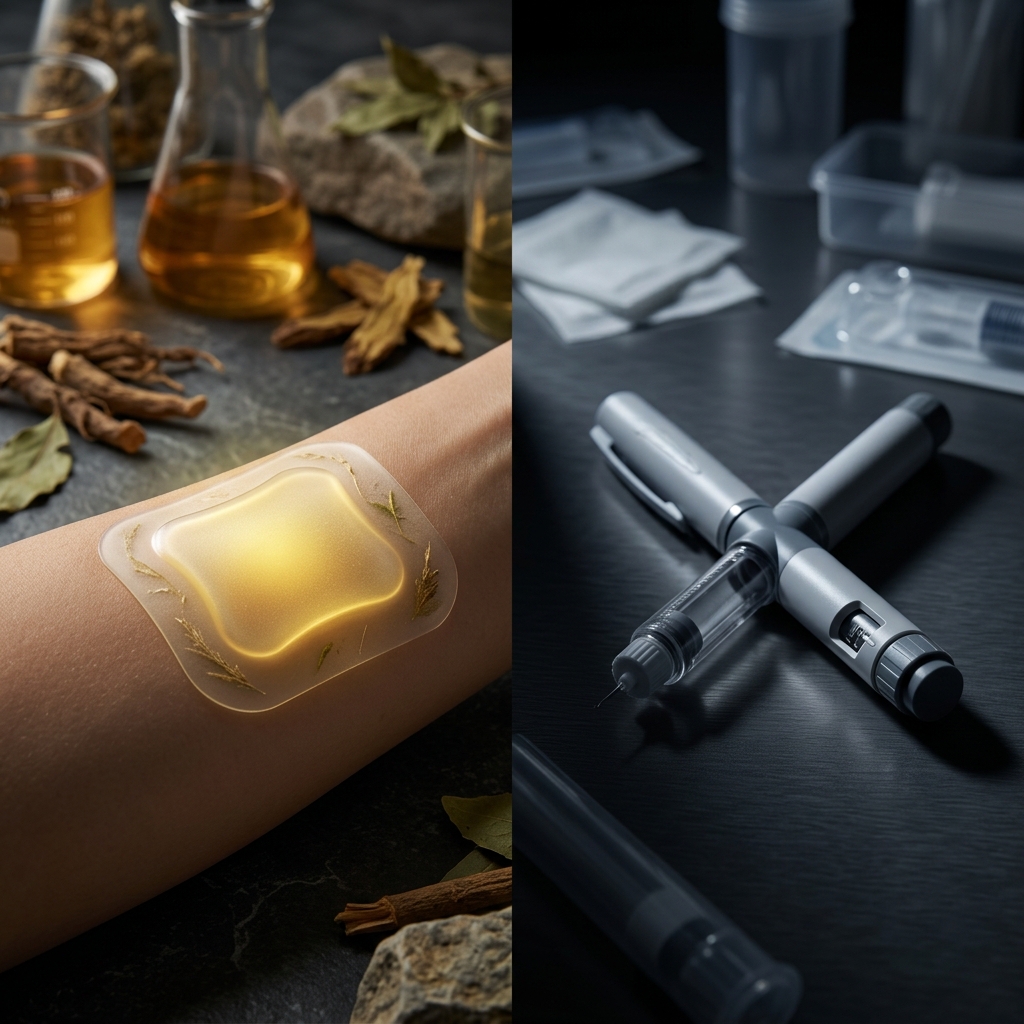
When analyzing the current landscape of metabolic health and medical weight loss in 2026, the debate inevitably centers around two heavyweights: berberine vs ozempic. One is a highly regulated, synthetic pharmaceutical peptide that has revolutionized obesity treatment; the other is a naturally occurring alkaloid with thousands of years of traditional use, recently dubbed "Nature's Ozempic" by viral social media trends.
But how do they actually compare at the cellular level? Can a plant extract truly mimic the effects of a GLP-1 receptor agonist? And more importantly, which option is correct for your specific biological profile, budget, and long-term health goals?
In this comprehensive clinical guide, we will dismantle the social media hype and rely strictly on peer-reviewed endocrinology data, pharmacokinetic mechanisms, and large-scale clinical trials to compare berberine vs ozempic. We will explore everything from molecular pathways (AMPK vs. GLP-1) to precise dosing schedules, expected weight loss timelines, side effect profiles, and the massive financial discrepancies between the two.
Furthermore, we will expose a critical flaw in how both are traditionally administered—and introduce the transdermal delivery systems and compounded solutions that are changing the way patients approach these therapies in 2026.
The Superior Berberine Delivery Method
If you choose berberine, bypass the infamous stomach cramps with medical-grade transdermal patches.
Shop Transdermal BerberineUnderstanding the Fundamentals: What Are They?
What is Ozempic (Semaglutide)?
Ozempic is the brand name for semaglutide, a prescription medication developed by Novo Nordisk. Originally FDA-approved in 2017 for the treatment of Type 2 diabetes, its profound effect on appetite regulation led to the development of Wegovy (a higher-dose version of the exact same molecule), which is explicitly FDA-approved for chronic weight management.
Semaglutide belongs to a class of drugs called GLP-1 receptor agonists. It works by mimicking a natural hormone in your body (Glucagon-Like Peptide-1) that targets areas of the brain that regulate appetite and food intake. It is administered via a once-weekly subcutaneous injection.
What is Berberine?
Berberine is a bioactive compound extracted from several different plants, including a group of shrubs called Berberis (barberry), Oregon grape, and tree turmeric. Historically, it has been a staple in Traditional Chinese Medicine (TCM) and Ayurvedic practices for treating infections and gastrointestinal ailments.
Modern science has identified berberine as an AMPK activator. It operates at the cellular level to improve insulin sensitivity and support glucose metabolism. Because it is a dietary supplement, it is available over-the-counter and is typically taken as a daily oral capsule—though advanced transdermal formats are becoming the clinical standard.
The "Nature's Ozempic" Myth: Mechanisms of Action
The term "Nature's Ozempic" suggests that berberine acts on the body in the exact same way as semaglutide. This is biologically false. To understand the berberine vs ozempic comparison, we must look at their entirely distinct mechanisms of action.
How Ozempic Works: The GLP-1 Pathway
When you consume food, your intestines naturally release GLP-1. This hormone tells your pancreas to release insulin (to manage blood sugar), tells your liver to stop producing glucose, and signals the hypothalamus in your brain that you are full. However, natural GLP-1 is destroyed by an enzyme called DPP-4 within two minutes.
Ozempic is a synthetic GLP-1 that resists enzymatic breakdown. It stays active in your system for a full week, providing three massive metabolic interventions:
- Central Nervous System Satiety: It powerfully suppresses appetite at the neurological level. The constant background signaling reduces what clinicians call "food noise." You simply do not feel hungry.
- Gastric Emptying: It slows the rate at which food leaves your stomach. By delaying digestion, you remain physically full for many hours after a small meal.
- Glucose-Dependent Insulin Secretion: It forces the pancreas to release insulin only when blood sugar is high, preventing hypoglycemia while rapidly clearing glucose from the bloodstream.
How Berberine Works: The AMPK Pathway
Berberine does not stimulate GLP-1 receptors. Instead, it activates an enzyme inside your cells called AMP-activated protein kinase (AMPK). Often referred to as the body's "metabolic master switch," AMPK regulates energy homeostasis.
- Cellular Energy Deficit: When AMPK is activated, it signals to the cell that energy (ATP) is low. The cell responds by increasing glucose uptake from the blood and burning stored fat for fuel (fatty acid oxidation).
- Insulin Sensitization: Berberine upregulates the expression of insulin receptors, making your cells more responsive. This is why it is frequently compared to metformin.
- Gut Microbiome Modulation: Berberine has powerful antimicrobial properties that alter gut flora, increasing short-chain fatty acid production which indirectly supports metabolic health and reduces systemic inflammation.
The Verdict on the Myth: Ozempic is an appetite suppressant and incretin mimetic. Berberine is a cellular energy modulator. While both lower blood sugar, Ozempic forces you to eat drastically less, driving rapid and substantial weight loss. Berberine optimizes how your cells handle the food you do eat, leading to modest weight management and metabolic health improvements.
Looking for Serious Weight Loss?
If you need significant appetite suppression and clinical results, explore clinician-guided GLP-1 therapies starting at just $146/mo.
Start GLP-1 AssessmentBerberine vs Ozempic: The Clinical Comparison Table
To provide a clear, high-level overview, we have synthesized the clinical data into the following comparative table evaluating berberine vs ozempic across key metabolic markers, costs, and efficacy.
| Clinical Feature | Ozempic (Semaglutide) | Berberine |
|---|---|---|
| Classification | FDA-Approved Prescription Drug | Over-the-counter Dietary Supplement |
| Primary Mechanism | GLP-1 Receptor Agonist | AMPK Activator |
| Average Weight Loss | 10% to 15%+ of total body weight (in 68 weeks) | 2 to 5 lbs (in 12 weeks), modest BMI reduction |
| Appetite Suppression | Extremely High (Neurological action) | Low to Moderate (Indirect via blood sugar stability) |
| Delivery Method | Once-weekly Subcutaneous Injection | 2-3x Daily Oral Pills OR Once-Daily Transdermal Patch |
| HbA1c Reduction | Very High (~1.5% to 1.8% reduction) | High (~0.7% to 1.0% reduction) |
| Side Effects Profile | Nausea, vomiting, diarrhea, muscle loss (if protein is low) | Severe GI distress (if oral), zero GI issues (if transdermal) |
| Average Monthly Cost | $900–$1,300 (Branded) / $146–$299 (Compounded) | $20–$50 (Oral) / $40–$60 (Transdermal) |
Efficacy for Weight Loss: What the Medical Data Actually Shows
The Semaglutide (Ozempic/Wegovy) Weight Loss Data
The clinical trial data for semaglutide is unprecedented in the history of obesity medicine. In the landmark STEP 1 (Semaglutide Treatment Effect in People with obesity) clinical trial published in the New England Journal of Medicine, participants taking the 2.4mg dose of semaglutide alongside lifestyle interventions achieved extraordinary results.
Over 68 weeks, participants lost an average of 14.9% of their total body weight. To put that in perspective, a 200-pound individual would lose nearly 30 pounds on average. Even more impressively, nearly a third of the participants lost more than 20% of their body weight, entering the realm of results previously only seen with bariatric surgery.
Because the medication physically slows down your digestive tract and chemically shuts down the hunger centers in the brain, patients naturally adopt a hypocaloric diet without the psychological strain, cravings, or willpower depletion associated with traditional dieting.
The Berberine Weight Loss Data
Berberine's weight loss data is solid, heavily researched, and statistically significant—but it exists in an entirely different weight class. A comprehensive 2020 meta-analysis of randomized controlled trials involving berberine supplementation found that it produces significant but modest reductions in body weight, body mass index (BMI), and waist circumference.
On average, participants taking 1,000mg to 1,500mg of oral berberine daily lost roughly 2 to 5 pounds over a 12-week period. The weight loss is driven by improved insulin sensitivity (reducing fat storage) and mild metabolic up-regulation via AMPK. It does not force you to stop eating. If you continue to overconsume calories while taking berberine, you will not lose weight. It is a metabolic optimizer, not a miracle fat burner.
Content Gap: The Fatal Flaws in Standard Delivery
Most comparisons of berberine vs ozempic stop at efficacy. But what top medical sites fail to address is that the standard delivery methods for both of these compounds are deeply flawed, causing high discontinuation rates among patients. The modern approach to these therapies involves advanced delivery systems and specialized pharmacies.
The Oral Berberine Crisis: "Berberine Belly"
As we detailed in our pharmacokinetic review of berberine oral bioavailability, standard oral berberine is a nightmare for the human digestive tract. It has an absolute oral bioavailability of less than 1%. The liver heavily metabolizes it during first-pass, and P-glycoprotein efflux pumps actively spit it back into the intestines.
To get any clinical effect, you have to swallow massive doses (1,500mg) of this potent antimicrobial yellow powder. It sits in your gut, destroying both good and bad bacteria, irritating the intestinal lining, and triggering what is known as "Berberine Belly." Clinical studies show that up to 34% of users experience severe gastrointestinal adverse events, including explosive diarrhea, painful cramping, and nausea. Most people throw the bottle away within two weeks.
The Solution: Transdermal Berberine Patches. By moving the delivery mechanism from the gut to the skin, transdermal delivery systems bypass the digestive tract entirely. Medical-grade patches push the compound directly into the bloodstream over a 24-hour period, avoiding first-pass liver metabolism and providing steady-state AMPK activation with absolutely zero stomach cramps.
Upgrade Your Berberine
Stop punishing your gut. Get maximum absorption with sustained-release transdermal patches.
Shop Transdermal BerberineThe Ozempic Access Crisis: Cost and Shortages
The flaw with Ozempic isn't the delivery (subcutaneous injections are highly effective); the flaw is the pharmaceutical monopoly. Branded Ozempic and Wegovy cost upwards of $1,000 to $1,300 per month out-of-pocket in the US. Insurance companies are increasingly dropping coverage for weight loss medications, demanding exhausting prior authorizations. Furthermore, Novo Nordisk cannot manufacture the pens fast enough, leading to constant national shortages.
The Solution: compounded semaglutide. During FDA-declared drug shortages, licensed 503A and 503B compounding pharmacies are legally permitted to compound the exact same active pharmaceutical ingredient (semaglutide base). This allows patients to access clinical GLP-1 therapy for a fraction of the cost—often starting under $150 per month—without dealing with insurance denials or pharmacy stockouts. (Learn more about how semaglutide treats insulin resistance off-label).
Who Should Choose Which?
You should choose Berberine (Transdermal) if:
- You only have 5 to 10 pounds to lose and want gentle, natural metabolic support.
- You are managing mild insulin resistance or PCOS and want a non-prescription option (see our Berberine for PCOS guide).
- You are looking for longevity and anti-aging benefits via cellular AMPK activation.
- You want an affordable, sustainable daily habit under $50/month.
You should choose Ozempic (Compounded Semaglutide) if:
- You have a BMI over 30, or over 27 with a comorbidity, and need to lose 15%+ of your body weight.
- You suffer from overwhelming "food noise" and cannot stick to a caloric deficit using willpower alone.
- You have severe metabolic syndrome or pre-diabetes requiring clinical intervention.
- You are ready to commit to a structured medical program and weekly subcutaneous injections.
Frequently Asked Questions (FAQ)
Can you take berberine and Ozempic together?
While they work on different pathways (AMPK vs GLP-1), combining them can lead to an additive blood sugar-lowering effect. This increases the risk of hypoglycemia (dangerously low blood sugar). You should never combine a potent metabolic supplement with a prescription GLP-1 without explicit authorization and monitoring from your prescribing physician.
Is berberine really "Nature's Ozempic"?
No. It is a brilliant marketing term that has confused millions of consumers. Berberine does not mimic the GLP-1 hormone, it does not drastically delay gastric emptying, and it will not suppress your appetite to the point where you forget to eat. It is an excellent metabolic health optimizer, but it is not a direct substitute for the pharmacological power of a GLP-1 agonist.
Does berberine have the same side effects as Ozempic?
They both cause gastrointestinal distress, but for entirely different reasons. Ozempic causes nausea and occasional vomiting because it slows down the physical emptying of your stomach. Oral berberine causes diarrhea and cramping due to its poor absorption and antimicrobial destruction of gut flora. However, if you switch to a transdermal berberine patch, the GI side effects drop to absolute zero.
Which one is better for PCOS?
Both are highly effective for Polycystic Ovary Syndrome, depending on the severity. Berberine is often used as a first-line natural alternative to Metformin for reducing androgens and improving insulin sensitivity in PCOS patients. GLP-1s like Ozempic are increasingly prescribed for severe cases where significant weight loss is necessary to restore ovulatory function and correct deep insulin resistance.
What is the difference in muscle loss?
Rapid weight loss from Ozempic can result in significant loss of lean muscle mass if the patient does not consume adequate protein and engage in resistance training. Because berberine induces much slower, milder weight loss and upregulates AMPK (which supports glucose uptake in muscle tissue), the risk of losing lean muscle mass is significantly lower.
Ready to Take Control of Your Metabolism?
Whether you want the gentle support of transdermal berberine or the clinical power of compounded GLP-1s, we provide the highest quality treatments available.
Academic References & Clinical Citations
- Wilding, J. P. H., Batterham, R. L., Calanna, S., Davies, M., Van Gaal, L. F., Lingvay, I., McGowan, B. M., Rosenstock, J., Tran, M. T. D., Wadden, T. A., Wharton, S., Yokote, K., Zeuthen, N., & Kushner, R. F. (2021). Once-Weekly Semaglutide in Adults with Overweight or Obesity. The New England Journal of Medicine, 384(11), 989–1002. https://doi.org/10.1056/NEJMoa2032183
- Asbaghi, O., Ghanbari, N., Shekoohi, N., Sadeghian, M., & Mousavi, S. M. (2020). The effect of berberine supplementation on obesity parameters, inflammation and liver function enzymes: A systematic review and meta-analysis of randomized controlled trials. Clinical Nutrition ESPEN, 38, 43–49. https://doi.org/10.1016/j.clnesp.2020.04.010
- Liu, C. S., Zheng, Y. R., Zhang, Y. F., & Long, X. Y. (2016). Research progress on berberine with a special focus on its oral bioavailability. Fitoterapia, 109, 274–282. https://doi.org/10.1016/j.fitote.2016.02.001